

Towards harmonisation of methods and knowledge for fauna passage monitoring in Europe
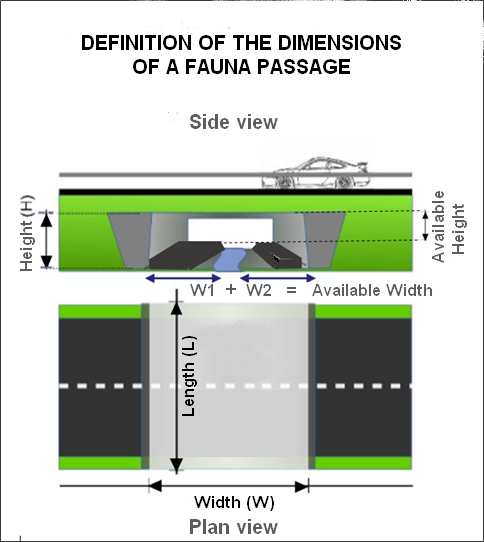
The dimensions of a fauna underpass (Credit: E. Guinard – Cerema)
Background
This working group was set up in the spring of 2025 in response to the problem posed by the numerous unreliable regulatory FAuna Passage (FAP) monitorings programmes and the lack of structured knowledge to assess FAPs properly:
– Despite the numerous handbooks available in almost all languages, there is no comprehensive list of the parameters and co-factors influencing the passage of animals through FAPs ;
– This lack of clear baseline knowledge leads to biased and even unreliable results due to the omission of important parameters and co-factors from monitoring protocols, sometimes by researchers, but most often by stakeholders in the context of regulatory monitoring of FAPs ;
– No ranking scale was proposed to prioritise studies on FAPs amongst the questions raised, in order to help stakeholders and local authorities prioritise their investments in FAP monitoring and to properly draw up protocols enabling them to obtain answers to the questions they are asking and for which they legitimately hope to receive actionable answers.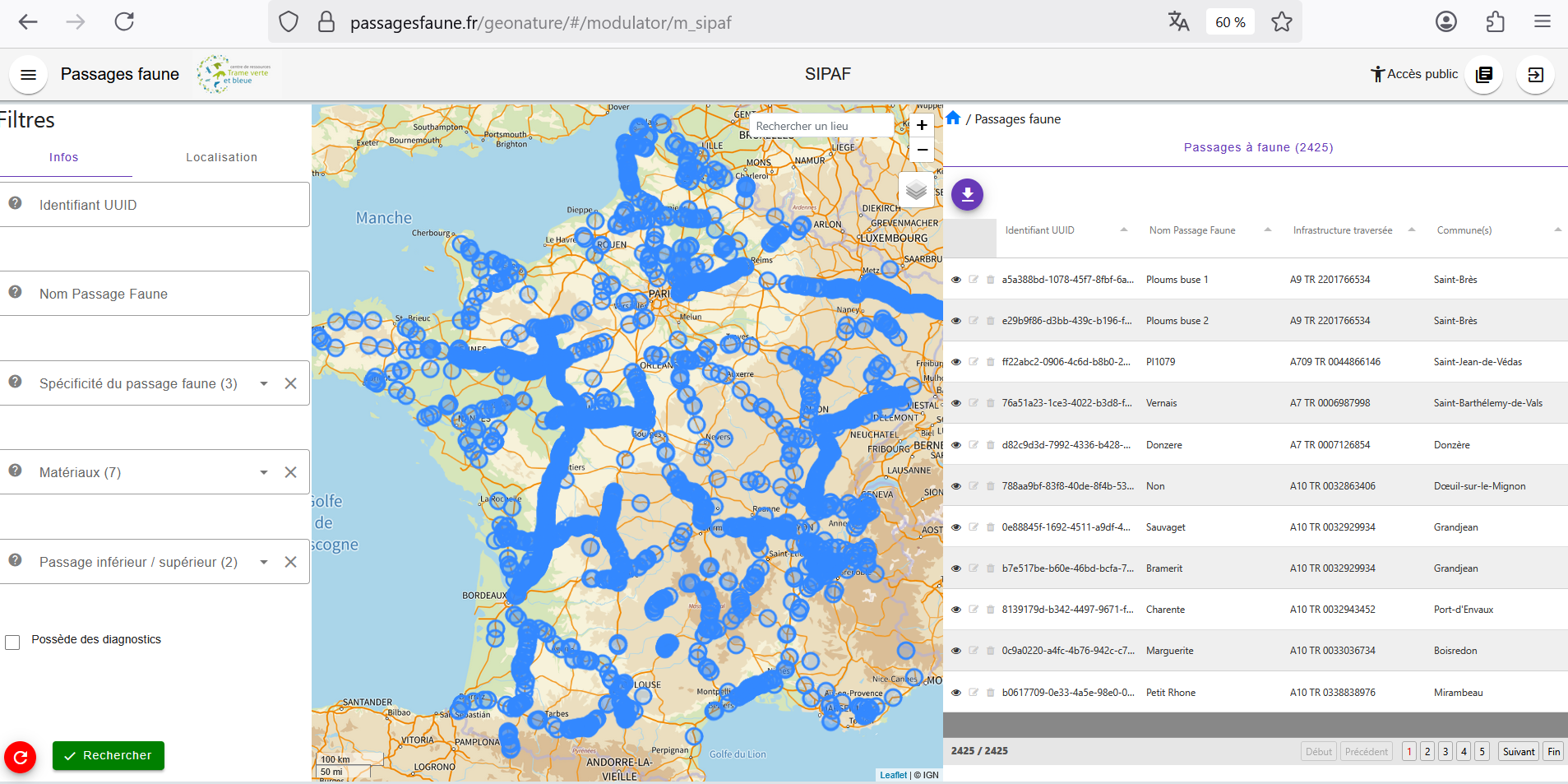 SIPAF website – French national FAP database 2425 FAP recorded on Sept. 2026 (Credit : Cerema)
The MEFAP Working Group objectives are:
– To develop a scale for ranking all types of studies to those that should fall within our remit;
– To produce a ‘to-do’ list (for FAP monitoring) of parameters and co-factors to be assessed for stakeholders and local authorities;
– To publish an ‘opinion paper’ analysing the shortcomings in various regulatory FAP monitoring frameworks, to provide a checklist for researchers, stakeholders and local authorities, and a ‘harmonised FAP monitoring protocol’ which could serve as a basis for possible future standardisation (under construction);
– Writing a new chapter in the IENE Handbook on Biodiversity and Infrastructure, containing a list of the main questions asked by stakeholders and local authorities regarding the FAP they wish to monitor, and guidance on how to develop – or at least understand how to develop – a minimal yet comprehensive protocol using the data they already possess and the data they require (under construction). Chiro-crossing (A65 motorway southwestern France) Credit – E.Guinard – Cerema)
Upcoming Events & Opportunities
The meeting is held online every 2 months.
Join Us
To learn more about the MEFAP working group or to get involved, please contact:
Eric Guinard – eric.guinard@cerema.fr
or the IENE Secretariat – info@iene.info
The MEFAP is open to all IENE members and non-members. Yet we ask you to consider joining the IENE network and becoming part of the dynamic international community at the forefront of infrastructure and ecology.
Participants
