

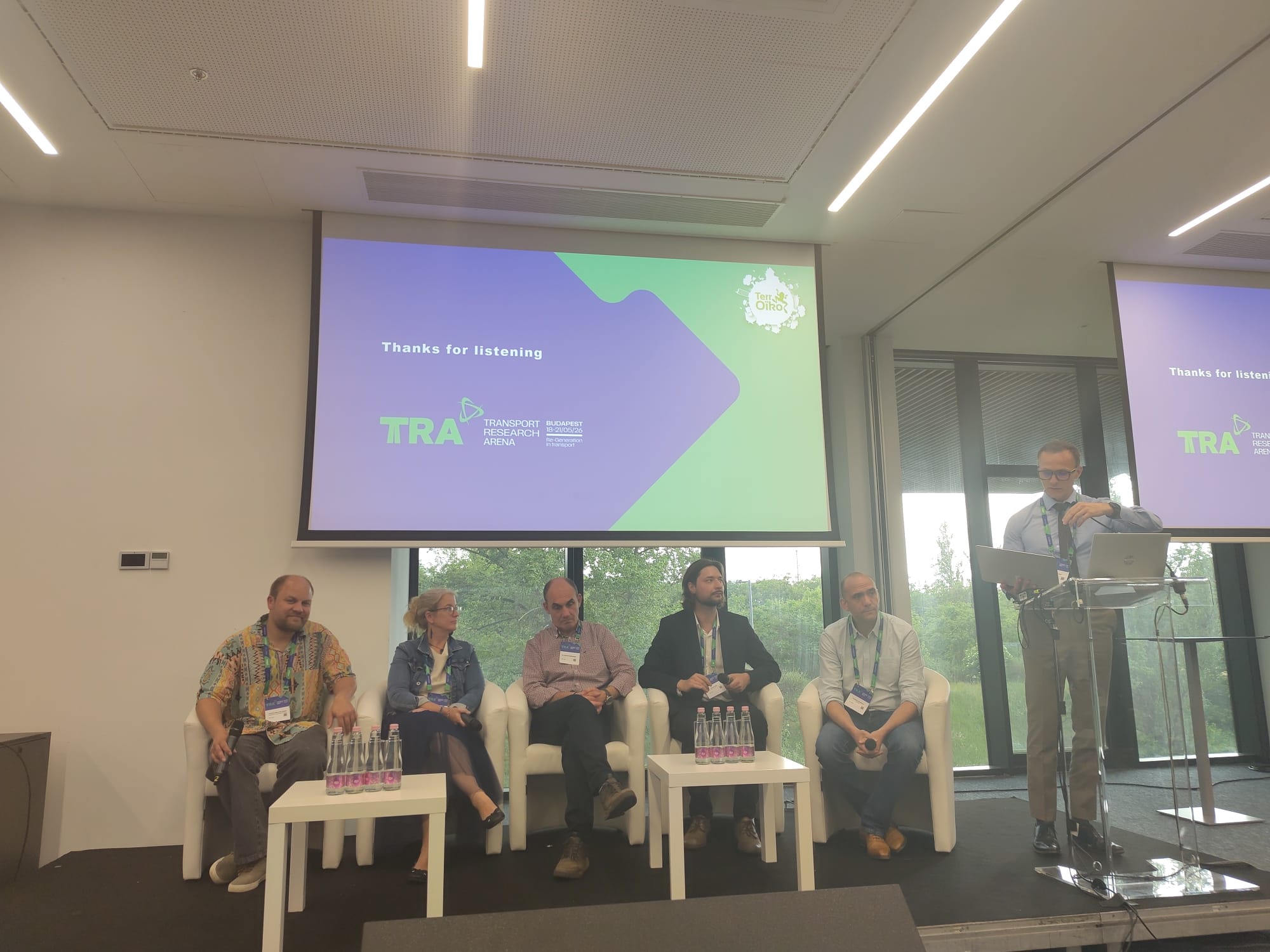
On 21 May 2026, IENE members and partners gathered in Budapest for a dedicated special session on biodiversity in transport at the Transport Research Arena 2026 (TRA 2026). Moderated by Thierry Goger (FEHRL, IENE Secretariat), the session brought together researchers, practitioners and policymakers to explore how transport infrastructure can transition from being a driver of biodiversity loss to becoming an active contributor to nature restoration.
Setting the Scene
Transport infrastructure is essential for economic and social connectivity — yet it remains one of the most significant drivers of biodiversity loss in Europe. Roads, railways, ports and airports fragment habitats, disrupt ecological corridors, generate pollution and increase wildlife mortality. Balancing growing mobility demands with the need to protect and restore ecosystems represents one of the most complex challenges facing planners, engineers and policymakers today.
Opening the session, Thierry Goger framed the broader ambition: moving beyond a logic of efficiency and short-term performance toward resilience, long-term viability and the sustainability of living systems. The session explored how tools, nature-based solutions and systemic design can embed biodiversity considerations throughout the transport lifecycle — and how these approaches can be translated into concrete practice.
The session was structured in two parts: five presentations followed by a roundtable discussion focused on the drivers for financing biodiversity in transport systems.
Presentations
Landscape-Adopted Infrastructure: National Policy and International Collaboration
Johan Rydlöv, Trafikverket (Sweden) — IENE President
Johan Rydlöv opened the presentations by reframing the very relationship between transport and nature: *”Ask no longer what nature can do for you — ask what you can do for nature.”* Drawing on Sweden’s experience and IENE’s international network, he outlined the case for ecologically sustainable infrastructure policy, arguing that fencing and barrier solutions are fundamentally insufficient. *”Animals are not different from ourselves,”* he noted — if an obstacle blocks a path, the instinct is to find another way, not to give up.
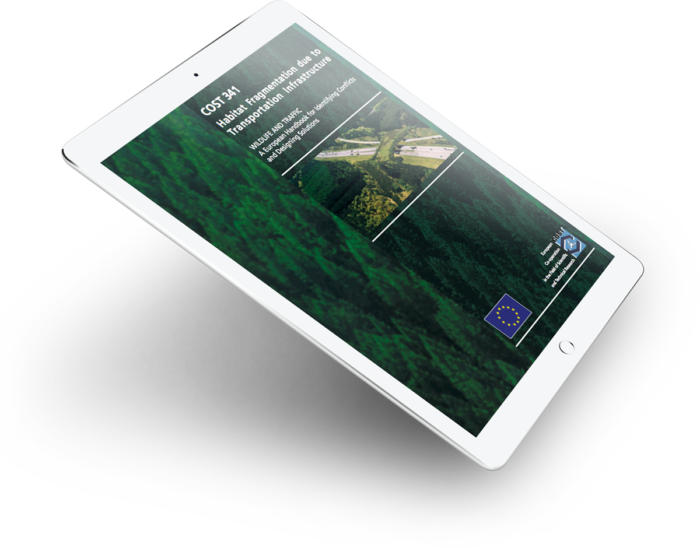
Johan highlighted the need for binding policy frameworks that create predictability, cost efficiency and transparent communication with society. He pointed to international success stories — the Netherlands’ Deltaplan Biodiversiteitsherstel, Germany’s Federal Defragmentation Programme, and Sweden’s Ecological Standards for Roads and Railways — as evidence that systemic approaches work. He also presented the International Handbook on best practices for biodiversity-friendly infrastructure (www.biodiversityinfrastructure.org) and called on participants to join IENE’s efforts to harmonise transport and biodiversity across Europe.
Mainstreaming Biodiversity in the UN Decade of Sustainable Transport 2026–2035
Lazaros Georgiadis, CERTH — IENE Member
Lazaros Georgiadis offered a sweeping perspective on the state of biodiversity and transportation as we enter the second quarter of the 21st century. Presenting the primary effects of infrastructure on biodiversity — from habitat fragmentation and barrier effects to mortality and sensory pollution — he introduced the concept of “3D transportation ecology,” moving beyond two-dimensional road corridors to consider the full spatial complexity of ecological impacts.
Drawing on EEA data, he highlighted the alarming fragmentation status of European landscapes, where infrastructure networks have progressively reduced habitats into increasingly smaller and isolated patches, undermining ecological connectivity and long-term ecosystem resilience.
Lazaros also presented outputs from the SYMBIOSIS project, a pioneering interdisciplinary initiative to mainstream biodiversity in transport and energy infrastructure, covering transport policy, environmental impact assessments, sustainable land management and corporate sustainability reporting. He stressed the need to go beyond species lists and expert-based assessments, calling for standardised frameworks for biodiversity data and the inclusion of reversibility as a core decision-making criterion — with avoidance as the priority where impacts are irreversible.
Looking ahead, he shared IENE’s ongoing work to develop a Vision of Sustainable Transportation, noting that a review of existing transport visions from major stakeholders reveals a striking gap: the majority ignore biodiversity and the natural environment entirely. As we enter the UN Decade of Sustainable Transport (2026–2035), Lazaros called for institutions to integrate biodiversity and natural capital into their visions, break disciplinary silos, invest in proactive policies and ensure transparent accountability.
Habitat Defragmentation: The Austrian Way
Elke Hahn, BMK (Austria) — IENE Member
Elke Hahn presented Austria’s experience with habitat defragmentation, offering both a regulatory framework and a practical roadmap. Austria’s RVS guidelines define three categories of wildlife crossings based on corridor importance: supra-regional (A, minimum width 80m), regional (B, 50m) and local (C, 25m). These are anchored in a definition of barrier effect that determines where infrastructure constitutes a full barrier for wildlife movement.
For existing motorways — all of which have been fenced since the 1980s for safety reasons — Austria adopted a 2006 Directive requiring the construction of 20 crossing structures in supra-regional wildlife corridors. Elke highlighted the main challenges encountered: spatial planning constraints, conflicts with other infrastructure types and limited site availability. She also addressed the complexity of multimodal defragmentation, where roads, railways and other linear features intersect and compound their individual ecological impacts.
Her key lesson: *”Do it right from the beginning.”* Early integration of biodiversity considerations into infrastructure planning, binding strategic frameworks and close cooperation between environmentalists and technical teams are the most effective approaches — and the least costly in the long run.
Protecting the Danube Mayfly: A Case Study from Hungarian Roads
Mátyás Hullár, Hungarian Roads
Mátyás Hullár brought an operational and surprisingly intimate case study to the session: the protection of Ephoron virgo, the Danube Mayfly, along Hungary’s road network. A protected species whose adult stage lasts only a few hours, the mayfly has made a spectacular comeback along the Hungarian Danube since 2012, with populations growing significantly in recent years as water quality has improved — a testament to the visible results of environmental protection efforts.
The challenge: adult mayflies navigate using polarised light reflected from water surfaces, a natural system that is disrupted by artificial structures such as bridges. Large swarms can be attracted to bridges in their millions, creating both ecological and road safety issues. Hungarian Roads responded by developing and installing light barriers on affected structures — an innovative, targeted solution to a highly specific ecological problem that demonstrates the value of operational biodiversity management at the infrastructure level.
Biodiversity Management and Digital Tools: Digital Twin Approaches
Sylvain Moulherat, TerrOïko — IENE Member
Sylvain Moulherat closed the presentations by exploring the frontier of digital tools for biodiversity management in transport infrastructure. Co-founder of TerrOïko — a company specialising in complex data management, analysis and modelling for biodiversity — he presented digital twin approaches as a transformative way to manage the natural assets associated with transport networks.
Sylvain identified two critical barriers to achieving biodiversity no net loss in practice: the fragmentation of biodiversity data across multiple sources and formats, and the persistent mismatch between sophisticated ecological modelling tools and the actual capacities of infrastructure operators. From strategic planning and scenario-based design to light pollution management and public policy evaluation, he demonstrated how digital tools can bridge this gap — turning dispersed data into actionable insights and enabling infrastructure managers to monitor, model and improve the ecological performance of their assets over time.
Roundtable: Financing Biodiversity in Transport Systems
The second part of the session took the form of a roundtable discussion centred on a critical and often underexplored question: what drives investment in biodiversity within transport systems? The discussion examined three complementary sets of drivers:
• Regulatory frameworks, with particular attention to the emerging obligations arising from the Corporate Sustainability Reporting Directive (CSRD), which is beginning to reshape how private sector transport operators account for their biodiversity impacts.
• Voluntary approaches adopted by forward-looking organisations, which often go beyond regulatory requirements to embed biodiversity in their strategies, procurement processes and asset management.
• Accounting frameworks and moral responsibility, including the role of natural capital accounting and the ethical dimension of organisational decision-making in the face of biodiversity loss.
The discussion underlined the need to align these different drivers in a coherent and mutually reinforcing framework — one that can accelerate the mainstreaming of biodiversity into transport planning and operations at scale.
Looking Ahead
The TRA 2026 session on biodiversity in transport reflected both the progress made and the distance still to travel. Scientific knowledge, technical solutions and policy frameworks are advancing — but their integration into mainstream infrastructure planning and investment remains uneven. As IENE marks 30 years of working on biodiversity and transportation, and as the world steps into the UN Decade of Sustainable Transport, the challenge is no longer simply to develop tools and methods — it is to ensure they are adopted, funded and embedded into the institutions and governance structures that shape the infrastructure of tomorrow.
IENE remains committed to advancing this agenda through research, networking and international collaboration. We warmly thank all speakers and participants for their contributions to this session.